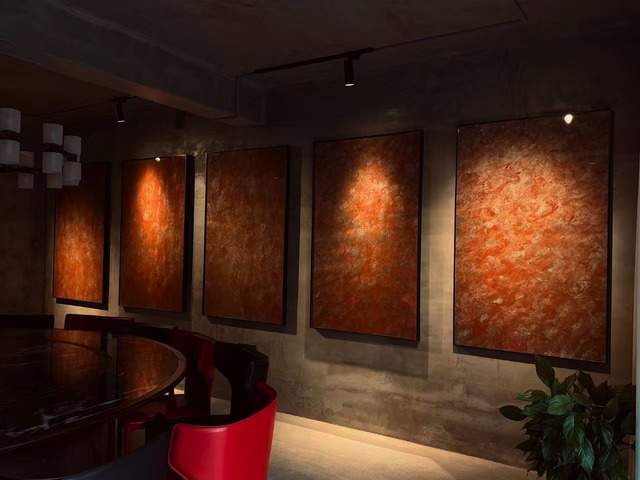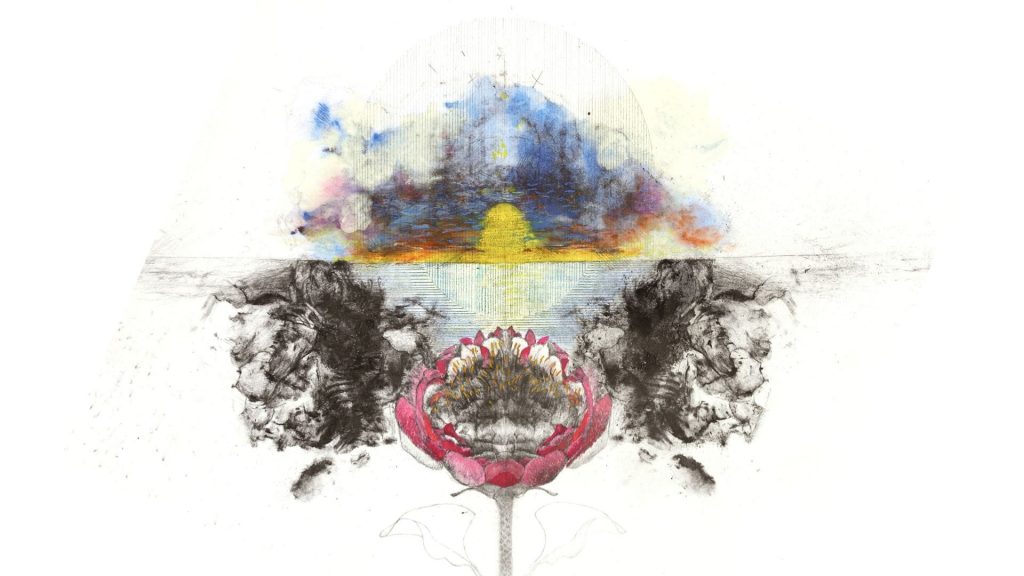
In 2025 I was artist in residence at Ningbo Museum of Art in China for 2 months as part of an international residency scheme established in 2016. I produced 3 bodies of work: a series of narrative drawings, large scale installational drawings and a body of clay sculptures. The overarching connection between these works was a response to the cultural historical and physical environment in Ningbo that focussed on the meeting of 3 rivers adjacent to the museum.
Confluence can refer to a point at which two or more bodies of water merge to form a single channel or it can be used to mean the blurring of boundaries between individual people, leading to a sense of oneness.
These duel-fold concepts conflate two major creative influences during my residency in Ningbo: the joining together of the 3 rivers in the immediate locality near the Museum of Art, and my encounter of The Butterfly Lovers, a legend founded in Ningbo.
My work often references myth and folklore as a way of exploring universal aspects of the human condition. Storytelling has the ability to traverse racial and time differences and involves archetypical characters and mythical narratives that are common throughout the world.
I have been looking at the story of The Butterfly Lovers, which is often compared to the Romeo and Juliet story based in Verona in Italy. The story, though ancient, contains aspects which are pertinent today. I chose to respond to certain elements which have contemporary resonance such as; identity, female emancipation, the power of transformation, and travel as a means of furthering knowledge and understanding. Ancient timeless symbols such as the underworld also feature.
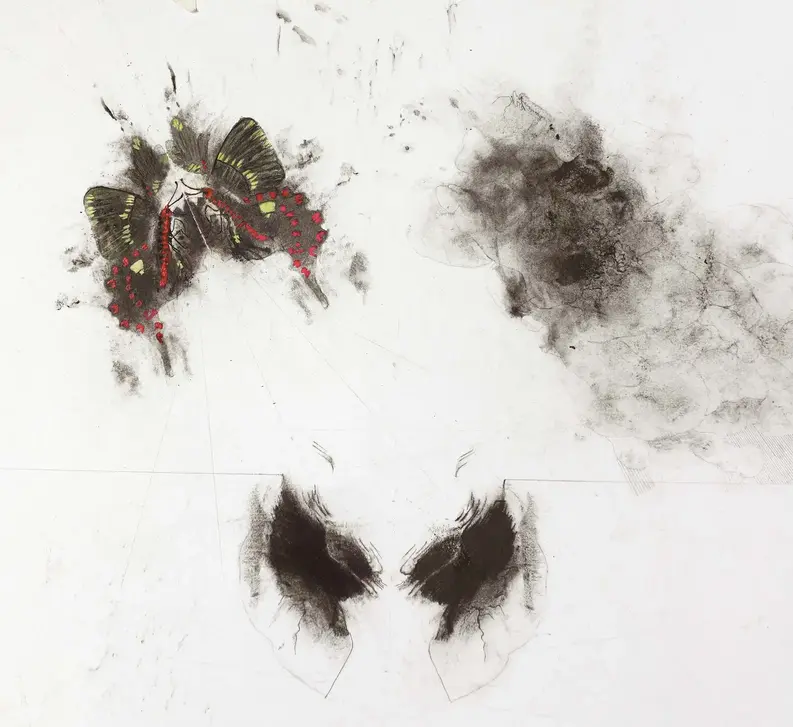
The story of the Butterfly Lovers involves the eventual union of two young lovers whose metamorphosis into various creatures such as mandarin ducks and butterflies metaphorically reference the power of transformation in the face of traditional social strictures. I have enjoyed the richness of the multifaceted imagery contained within the story which has enabled me to celebrate colour and to delight in the portrayal of mythical characters.
One of the biggest impressions on me during my experience of the environment in China was visual abundance, seamlessly combining the old and the new: amazingly colourful and (for me) strange fruit, beautiful gardens, ubiquitous graphic imagery, moving light displays, restaurants everywhere, traditional carved mythological creatures, contemporary fibre glass sculptures, highly decorative traditional buildings, enormous sky scrapers and more. I have encouraged this impression of abundance to influences my image-making during the residency.
Installations
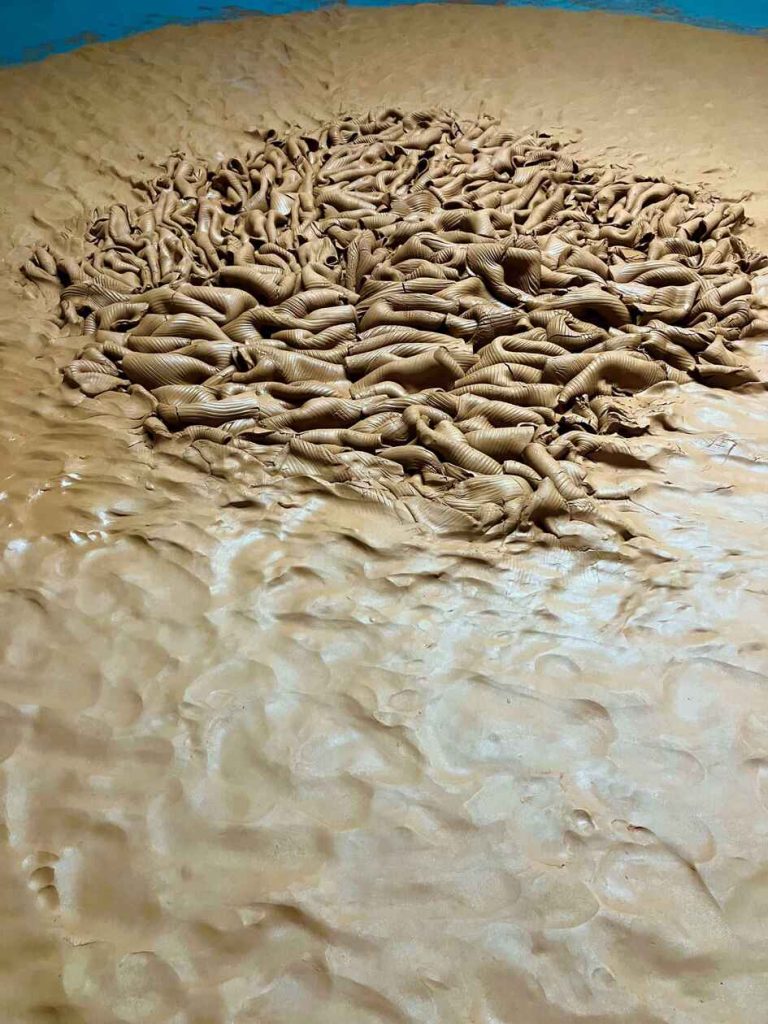
My sculptural work takes as its inspiration, the movement of the water observed at the meeting point of the 3 rivers that surround Lao Wai Tan: Yuyao Jiang, Yongjiang and Fenghua Jiang. These 3 channels of water with their own individual power and opposing directions, create a crisis point of disruption, confusion and conflict where they meet, creating clashing eddies, swirls and waves as they battle to eventually establish a single harmonious flow.
I use my feet on wet clay or graphite on paper to create similar surface patterns of flow and disruption – metaphorically drawing connections between the movement of water and the meeting of peoples which often creates conflict until eventually re-establishing calm. The area of Lao Wai Tan has been, historically a site of many meetings of peoples from all over the world and is a fitting site for the representation of the union of people.
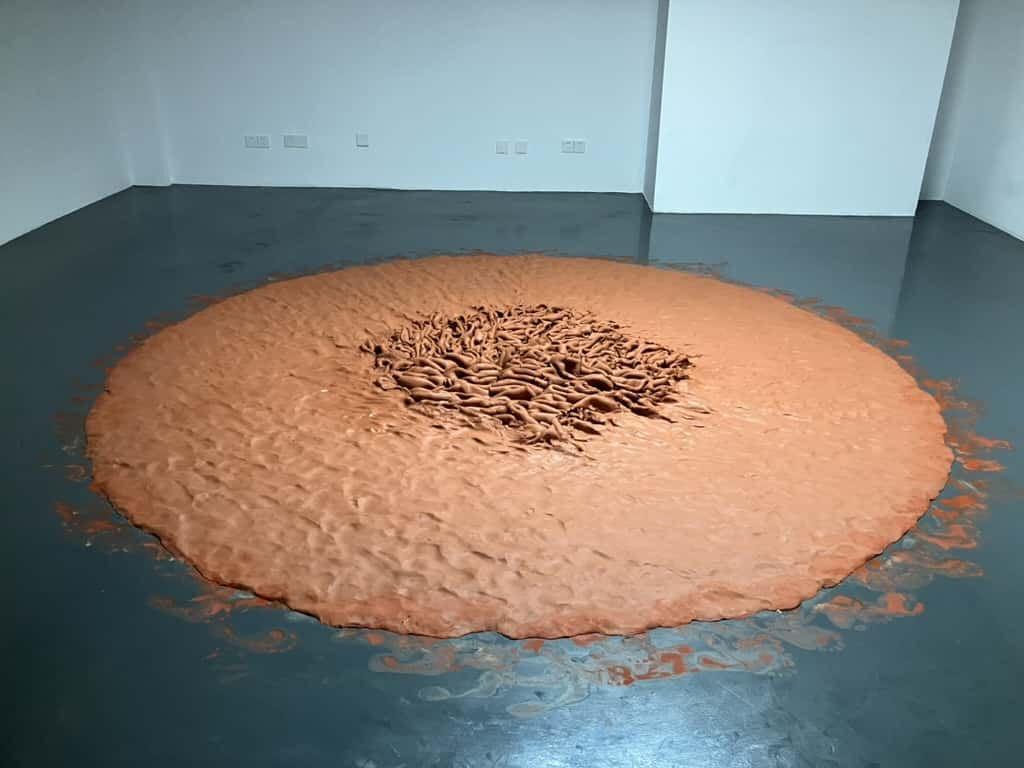
Raw clay.
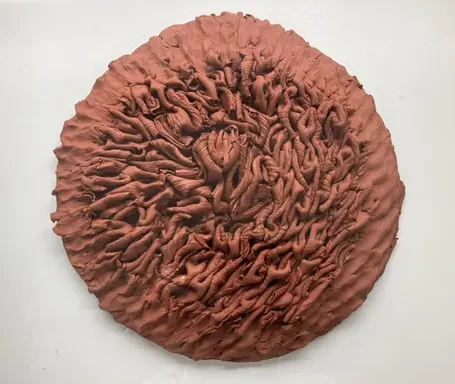
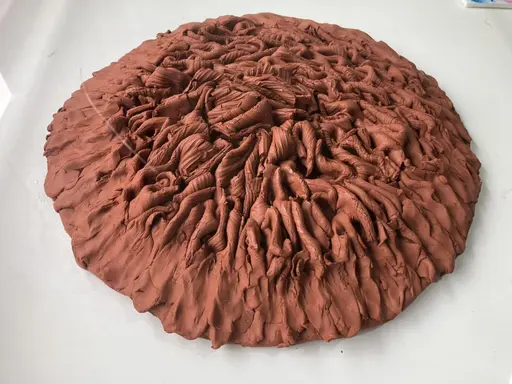
Small Maquettes
These small models were made as studies for the final sculpture.
Raw clay. Width 35cm.
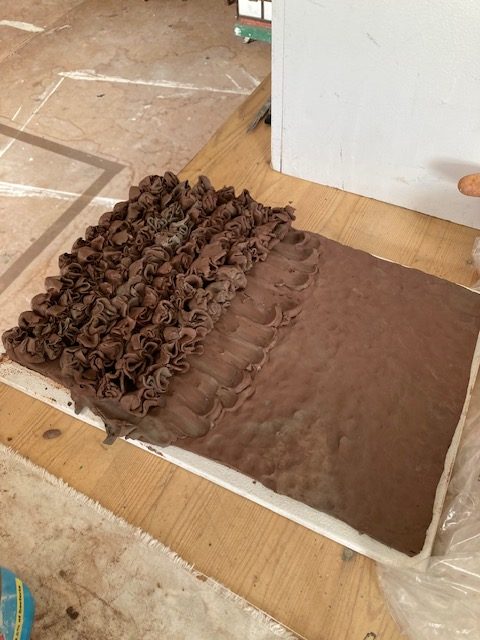
These rectangular maquettes were also made.
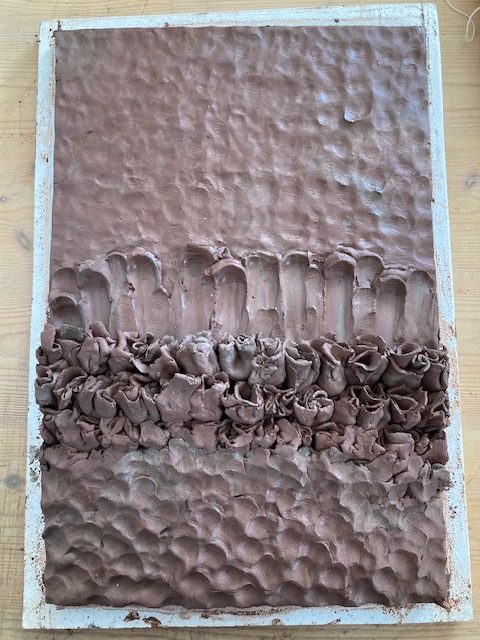
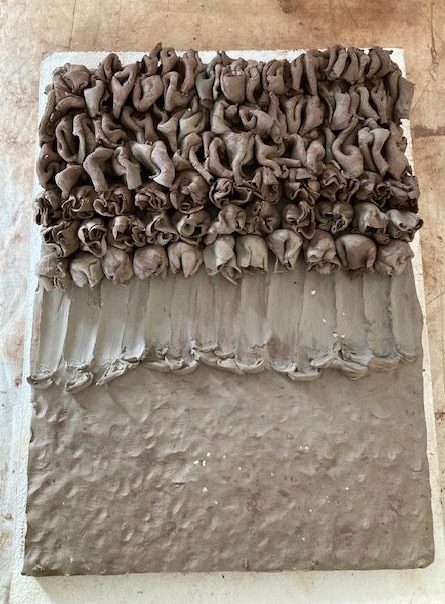
I had also been working on ideas associated with the power of the river bore in the Qiantang river which lies to the north East of Ningbo and flows through Hangzhou – the location of the Butterfly Lovers story. The bore, known locally as the “Silver Dragon”, is the world’s largest tidal bore. I was interested in the power of the natural phenomenon and the association it has with Chinese folklore and the mystical associations it spurns. In China the dragon is a benevolent but powerful deity (unlike the western, fire breathing version that requires slaying); a guardian of the elements controlling the weather, tides, and rivers.
This clay maquette incorporates the dragon’s scales as well as lotos flowers – a revered flower widely found in wetlands in China. The word lotos in China means peace; it symbolises purity, transcendence and enlightenment.
Raw clay. Dimensions 24 x 35cm
Small Narrative Drawings
This distinct set of drawings were made as part of the residency in response to the traditional folkloric story of The Butterfly Lovers.
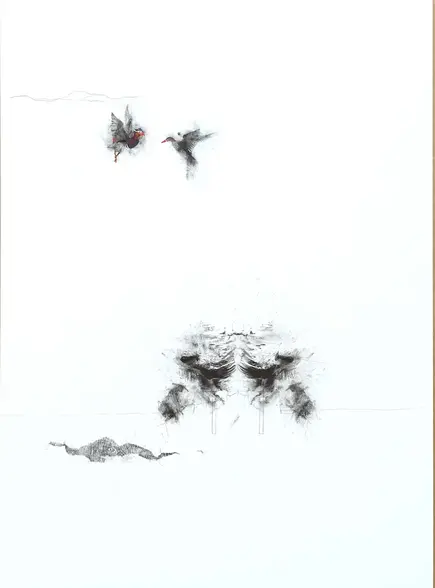
Graphite, charcoal, gouache.
The ominous clouds predict trouble as the story unfolds. The act of rejecting social conventions, in this case, traditional gender roles, forewarns tragic consequences.
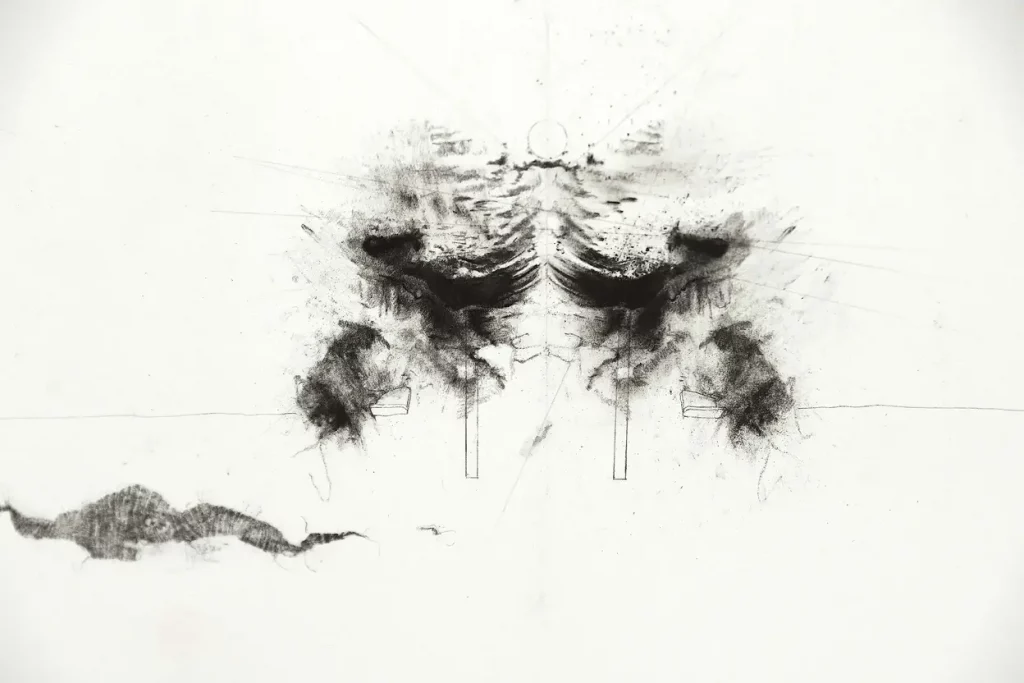
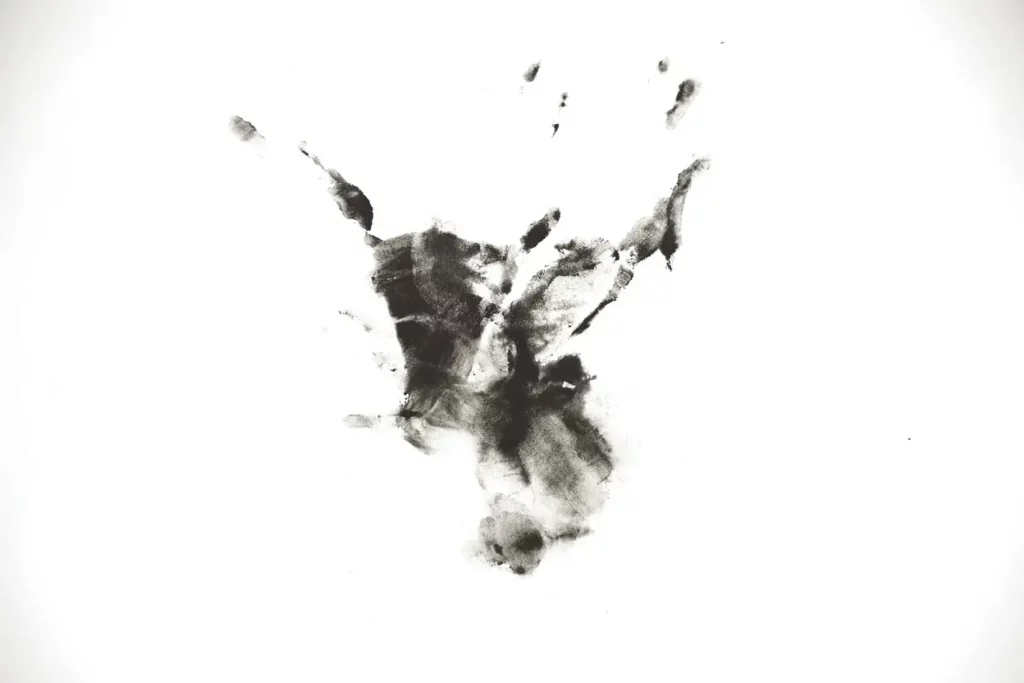
Liquid Graphite.
This abstract smudge typifies the start of my usual drawing process whereby I produce random marks then use my mind’s eye to draw out imagery I ‘see’ within the image – a process called Pareidolia. This initial drawing reminded me of calligraphy which is so prevalent within Chinese culture. I decided to leave the drawing as it was, in honour of its importance.
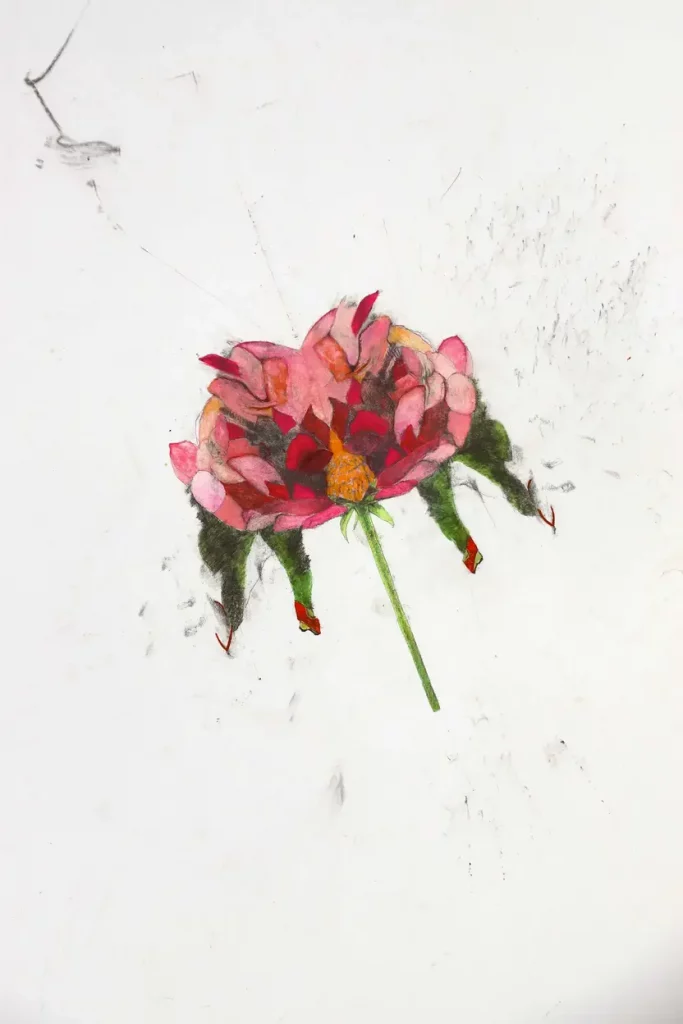
Graphite, charcoal, gouache.
The peony is a symbol of purity within the story of the Butterfly lovers. If the peony starts to fade, it indicates lost chastity.
Graphite, charcoal, gouache.
At the end of the story of the Butterfly Lovers, the earth opens, the lovers are united underground, they metamorphose into butterflies and fly away together, free at last.
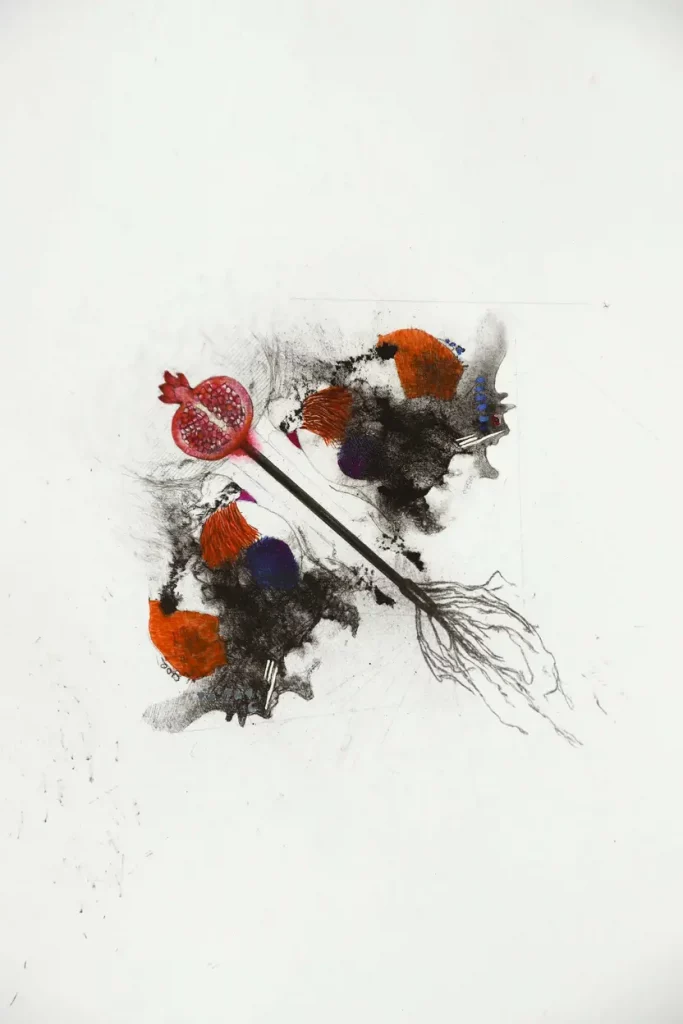
Graphite, charcoal, gouche, crayon.
The pomegranate is a symbol of fertility and passion.
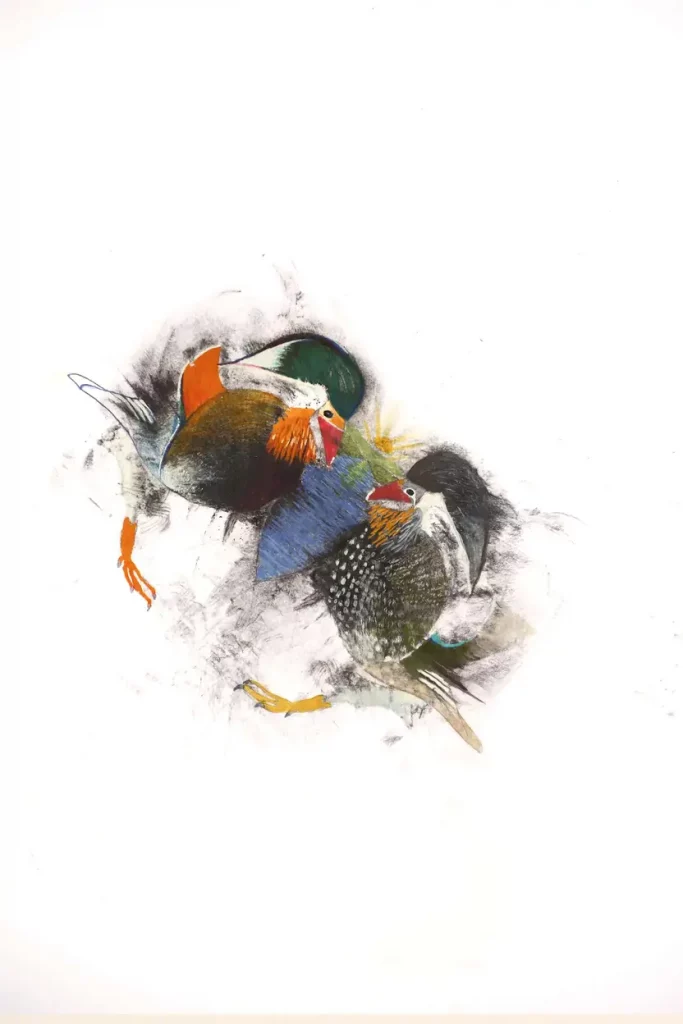
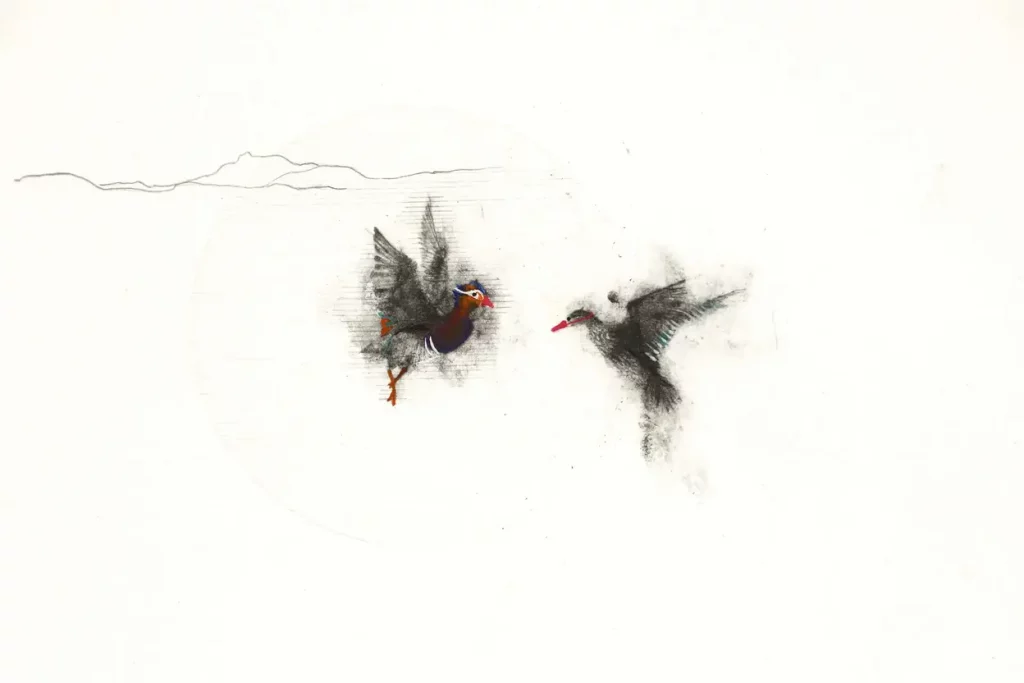
Graphite, charcoal, gouache, crayon.
Lovers are often depicted as mandarin ducks in Chinese culture. The males are very colourful and the females are grey. The story describes how the only way for the girl to fulfil her ambition to study is to adopt a male identity. Here the female dons the colourful male mask.
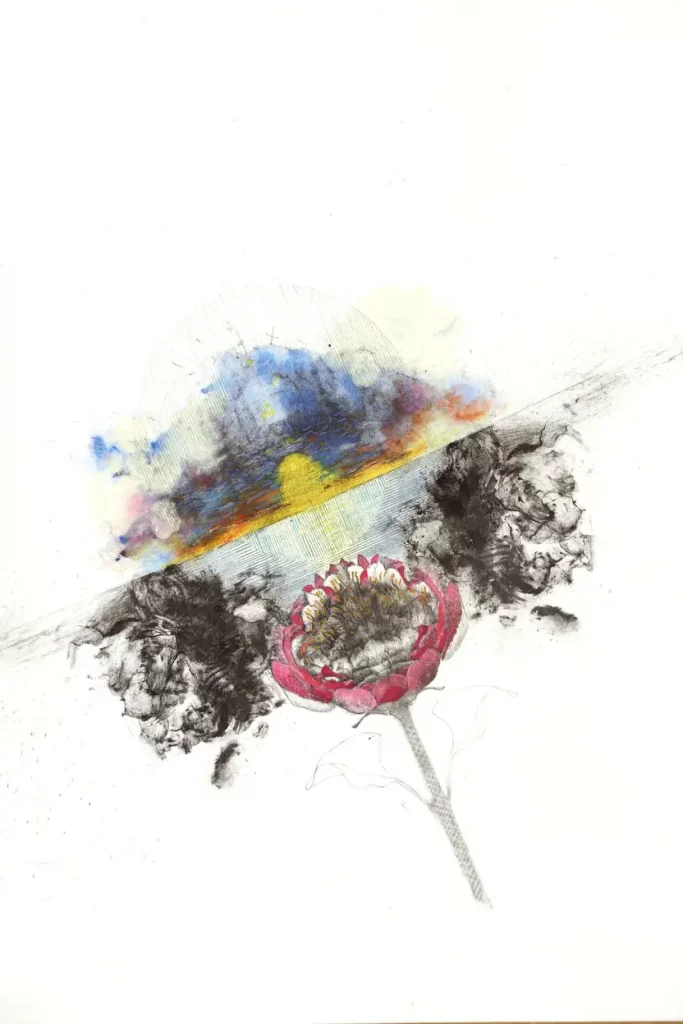
Graphite, charcoal, gouache.
The ominous clouds predict trouble as the story unfolds. The act of rejecting social conventions, in this case, traditional gender roles, forewarns tragic consequences.
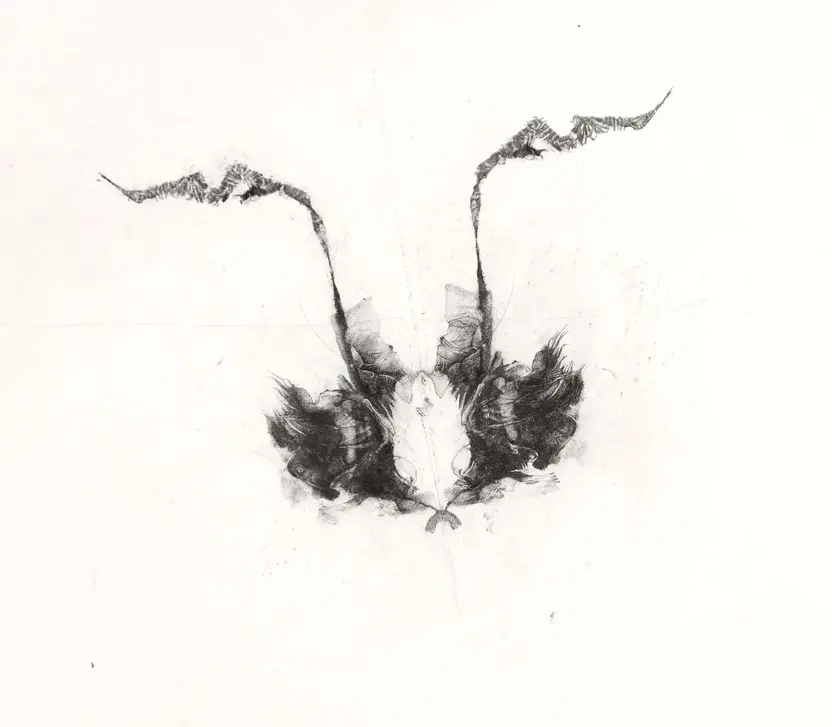
Graphite.
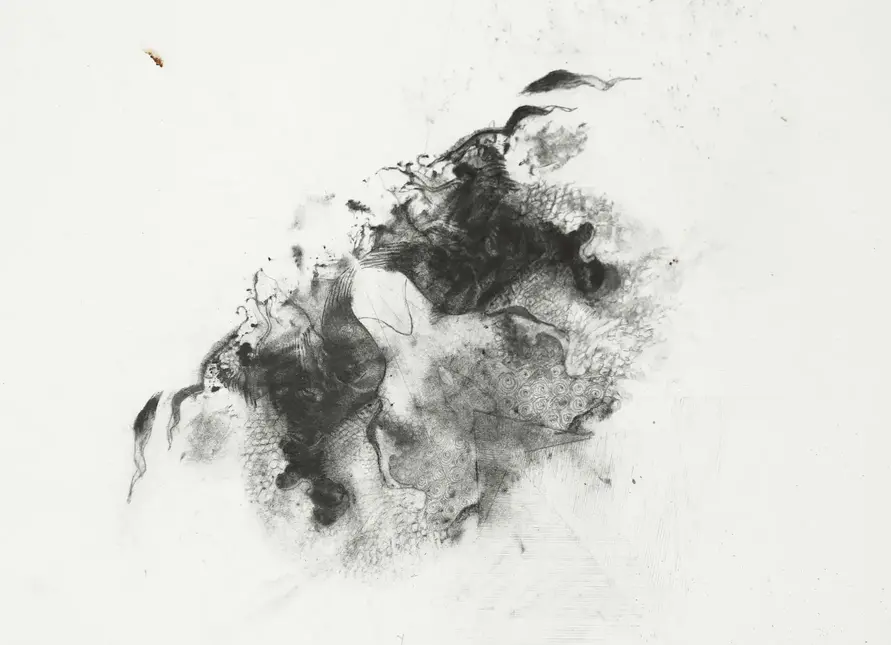
Graphite, charcoal, gouache, crayon.
This drawing has been influenced by the decorative architectural features oberserved around Ningbo.
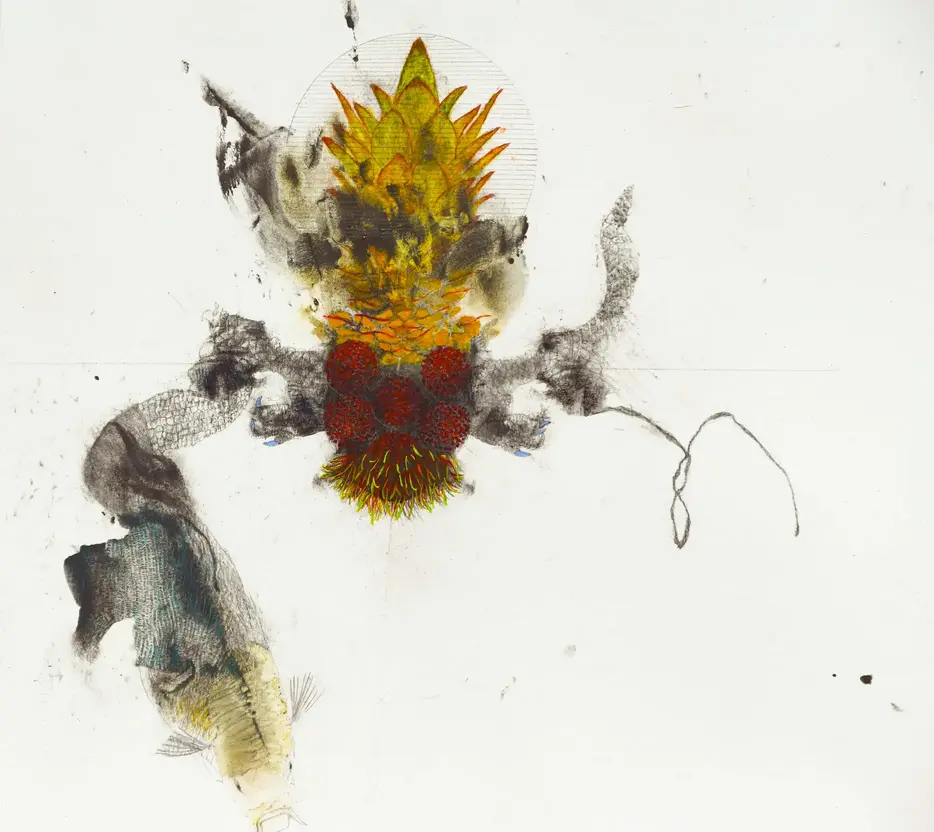
Graphite, charcoal, gouache.
This composite drawing is a celebration of the multiple impressions of wonderful and strange imagery I have encountered in China. One of the biggest impact on me during my experience of the environment in China is visual abundance, seamlessly combining the old and the new; amazingly colourful and (for me) exotic fruit, beautiful gardens, ubiquitous graphic imagery, moving light displays, restaurants everywhere, traditional carved mythological creatures, contemporary fibre glass sculptures, highly decorative traditional buildings, enormous sky scrapers and more.
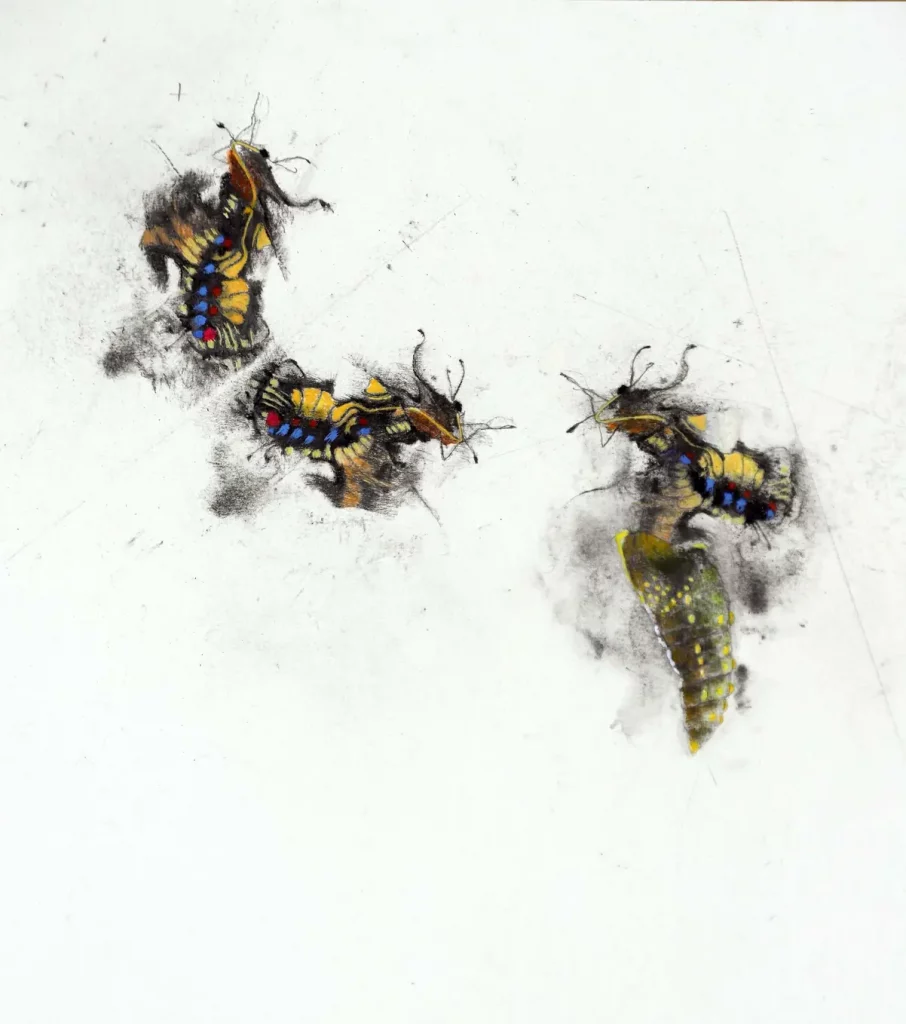
Graphite, charcoal, gouache, crayon.
This drawing depicts the lovers as they metamorphose into butterflies. One watches patiently as the other emerges from its chrysalis. The swallowtail butterfly is one of the most common butterflies seen in and around Ningbo.
Large Scale Drawings
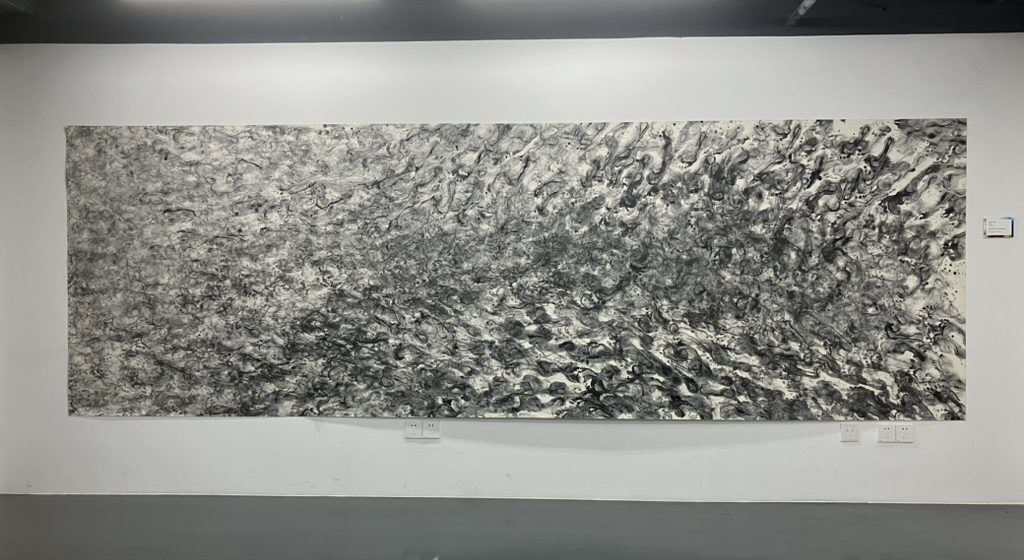
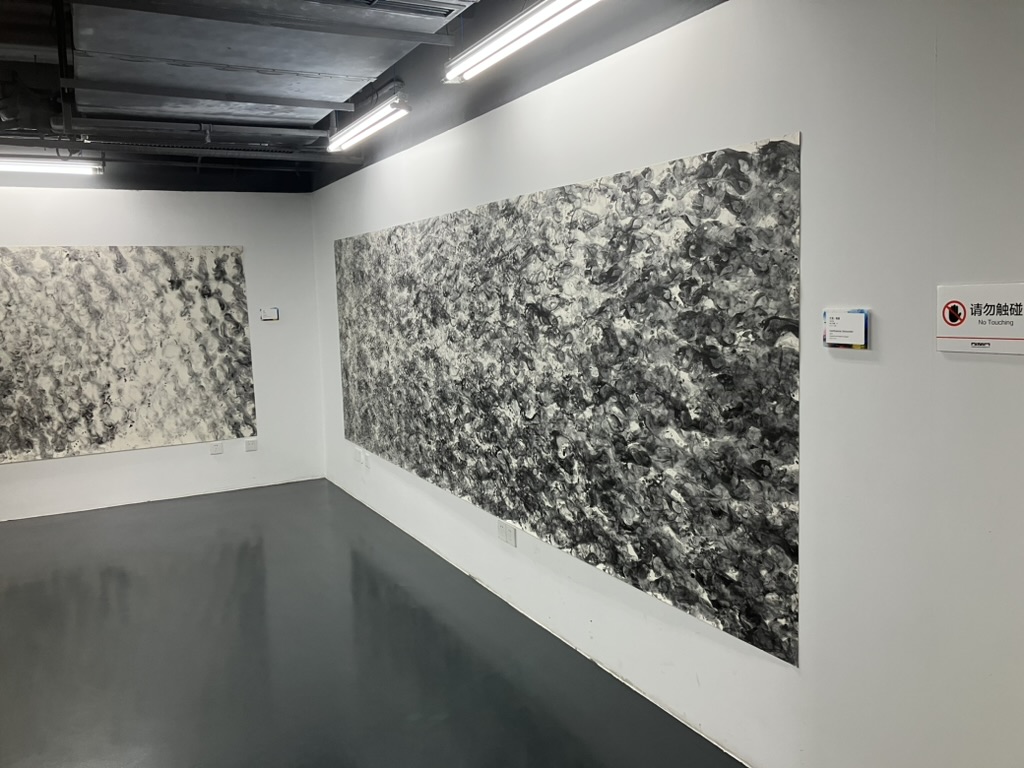
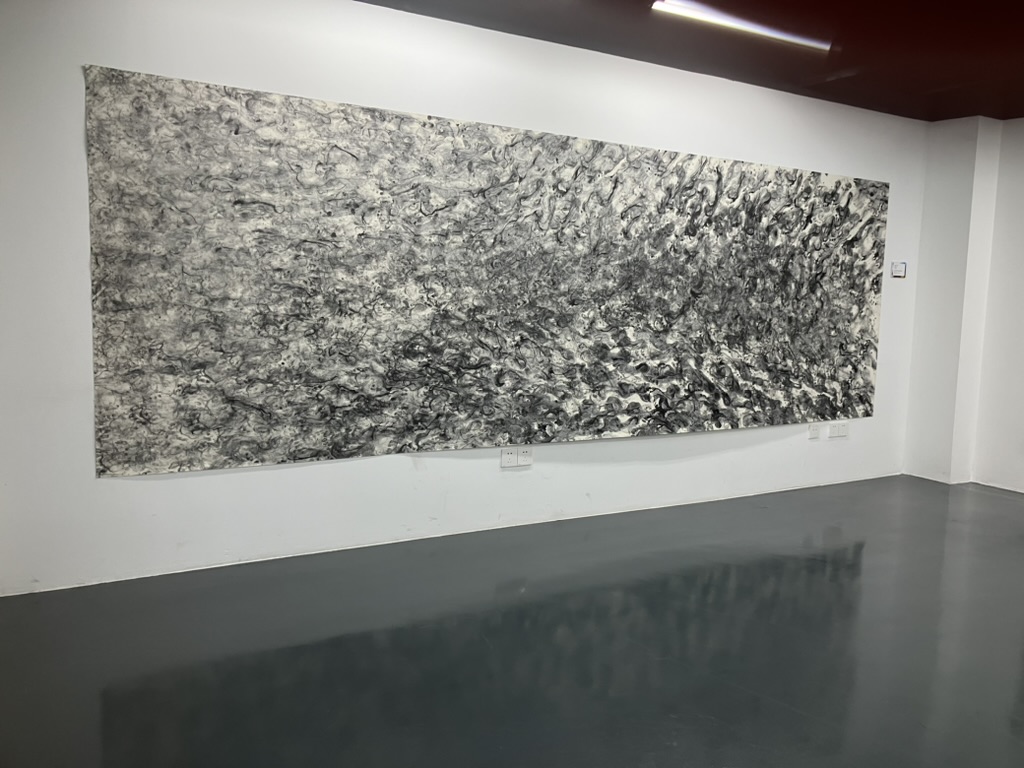
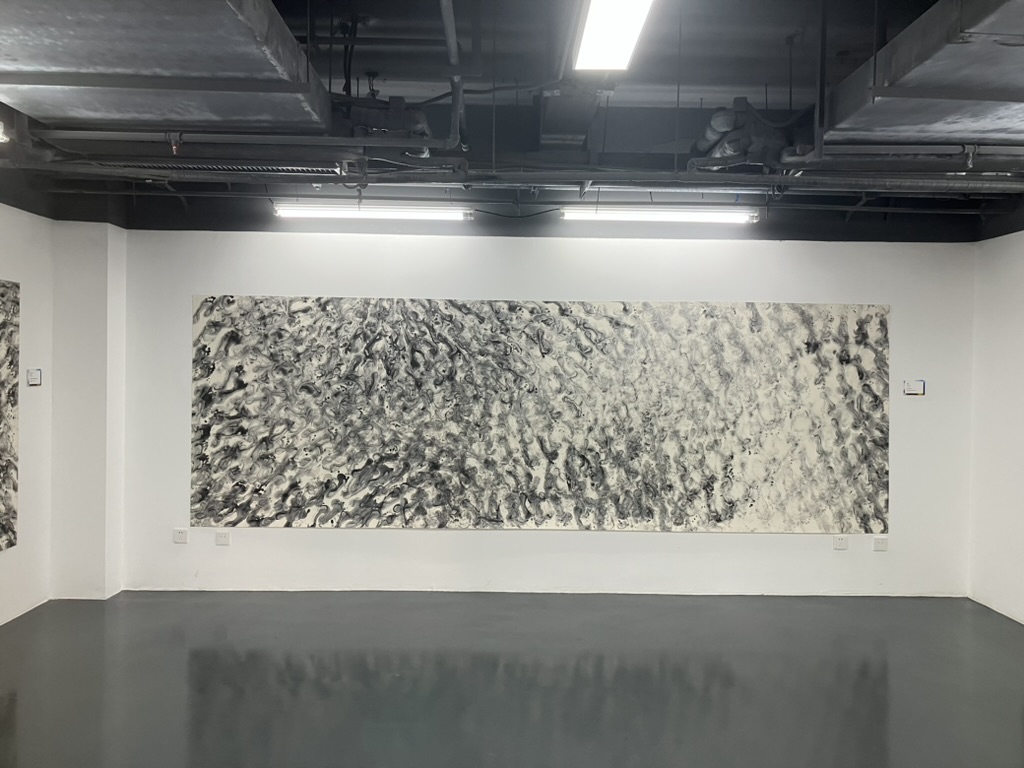
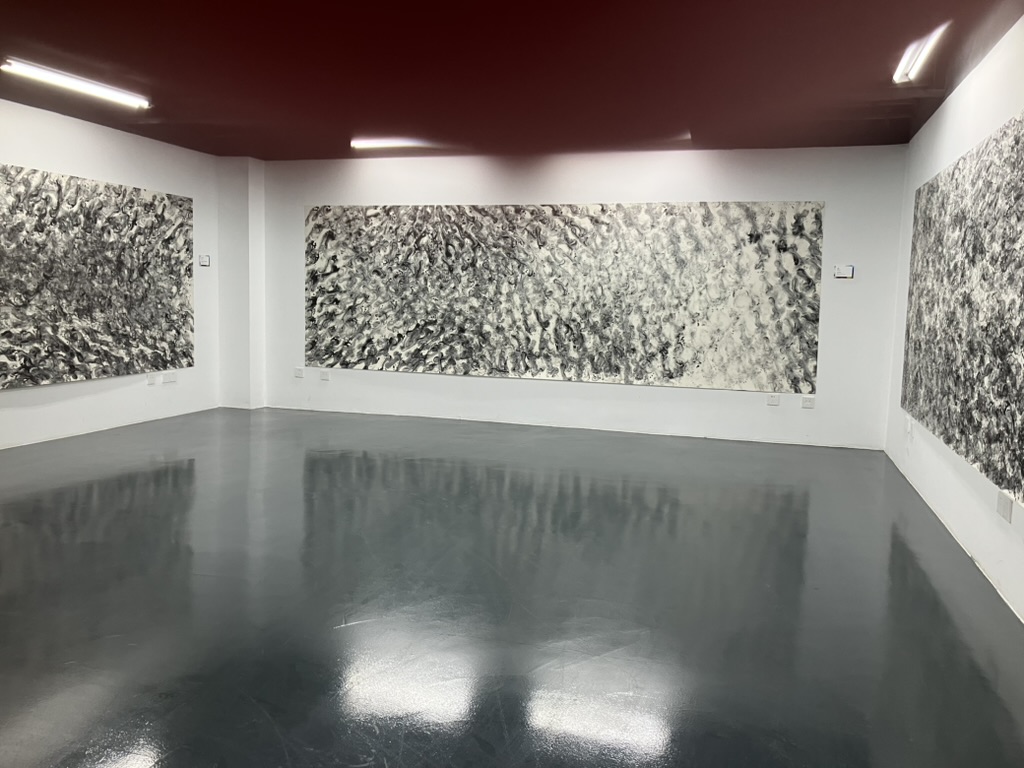
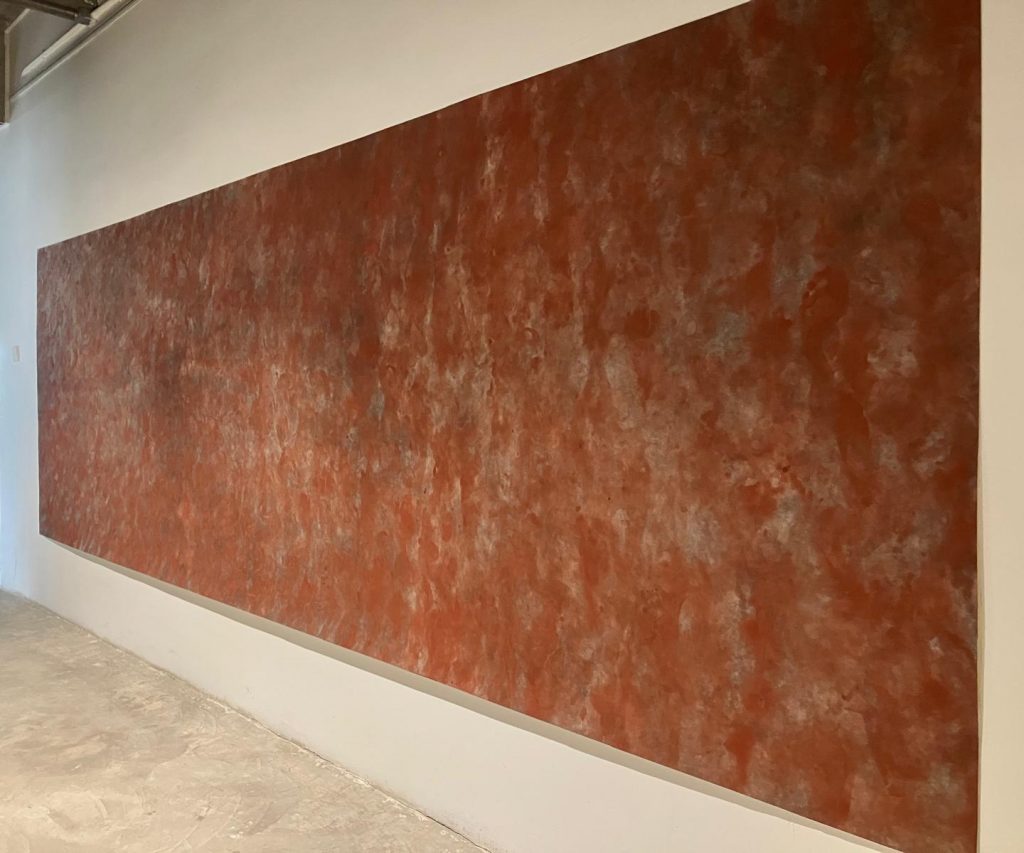
4.5 x 1.5 meters
Made with bare feet using pigment and graphite suspension and PVA on paper
Calm Waters was the final drawing made during the residency inspired by the meeting of the 3 rivers: Yuyao Jiang, Yongjiang and Fenghua Jiang in the immediate vicinity near the Museum, observing the way the flow of the water is disrupted on their meeting then settles into a new rhythm.
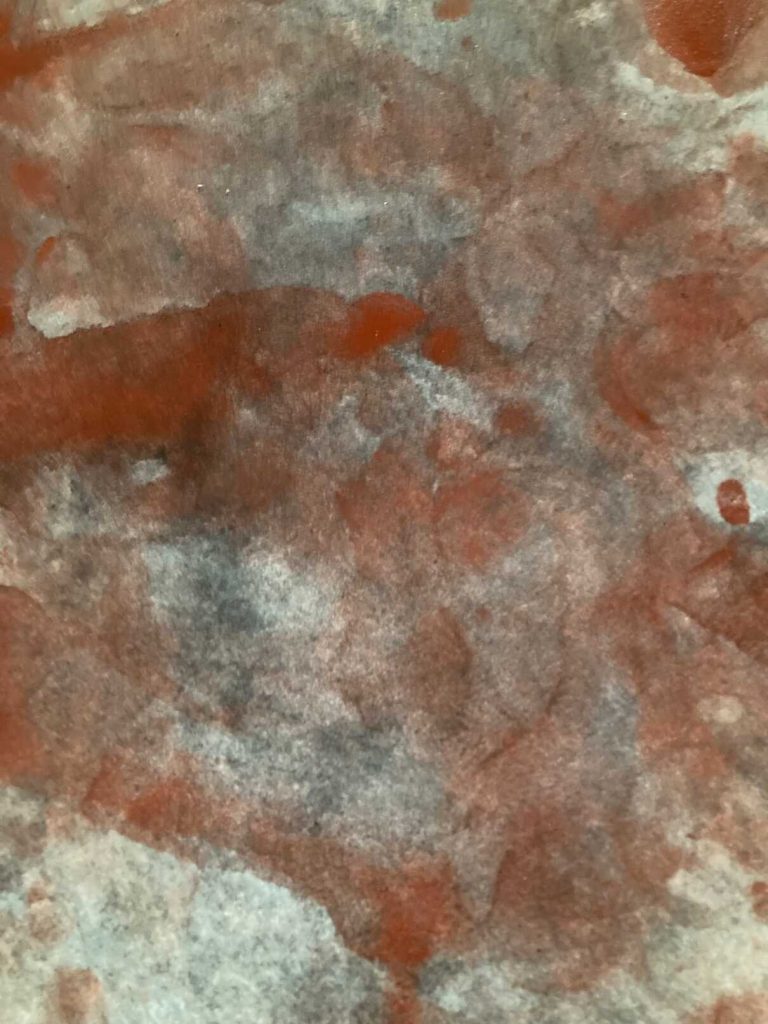
‘Influenced by the prevalence of the colour red in Chinese visual culture, I chose this colour to represent the final calming of the river flow. The colour of the pigment replicated the colour of the clay used in my sculptural works’.