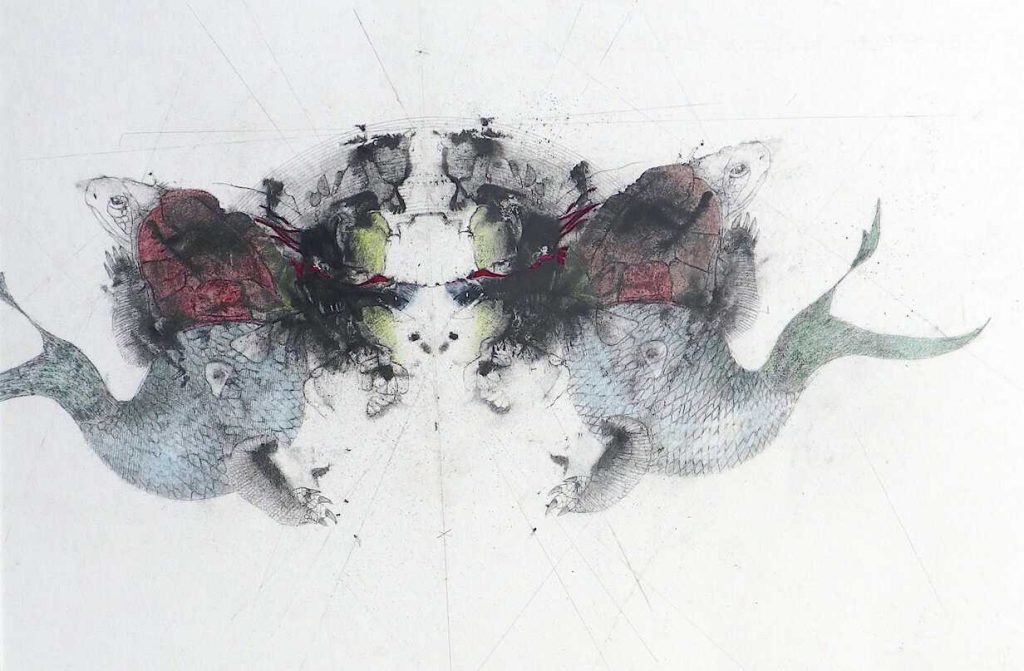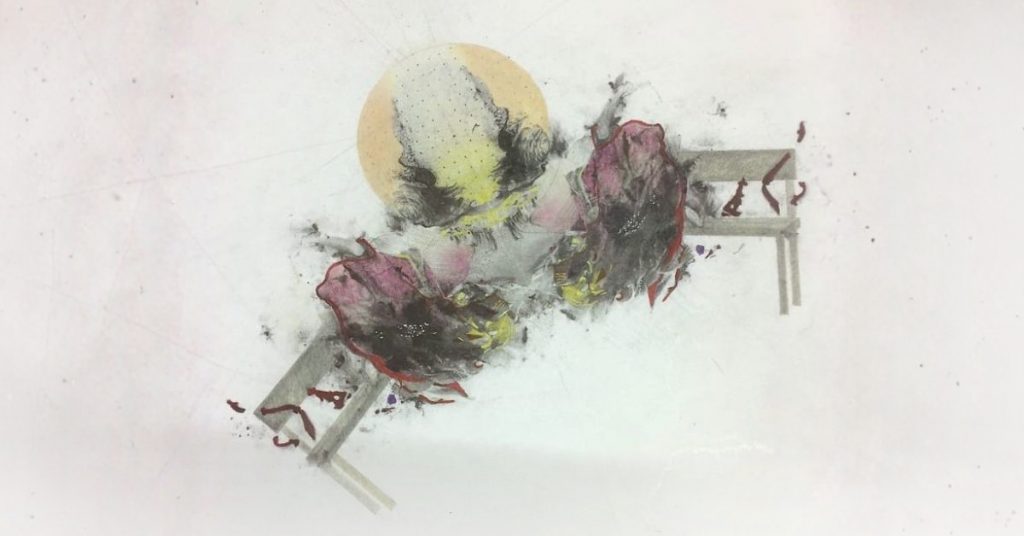
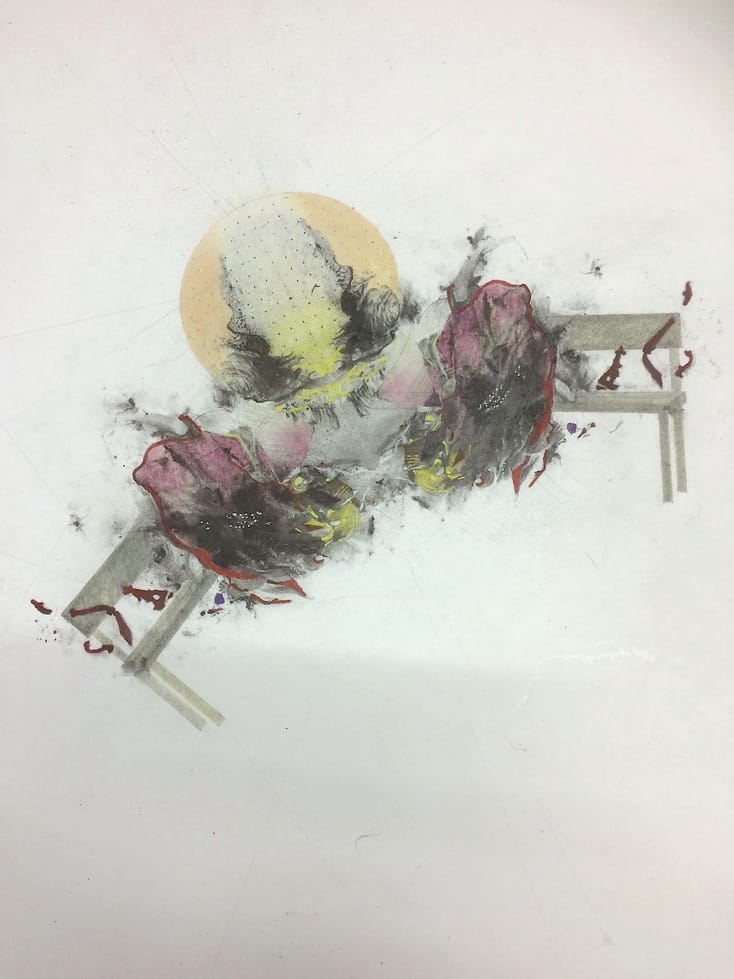
These drawings were exhibited at the Whitaker Museum and Art Gallery alongside the Saltarello sculptures in 2021 as part of the inaugural exhibition after a major refurbishment at the museum.
Drawing on an established repertoire of imagery ranging from mythical creatures, bones and other corporeal references, these drawings are steeped in ideas influenced by Carl Jung and his theories concerning dreams and the importance of myth in the understanding of collective consciousness, archetypes (particularly concerning the feminine), dark matter, the role of alchemy within creativity and the binary opposites of internal and external spaces within the psyche.
I also wanted to make reference to micro-organic forms – viruses.
‘A Drollery (or drollerie, often also called a grotesque, from French language), is a small decorative image in the margin of an illuminated manuscript, most popular from about 1250 through the 15th century. The most common types of drollery images appear as mixed creatures, either between different animals, or between animals and human beings, or even between animals and plants or inorganic things.’ Wikipedia
Drolleries were made by those whose job it was to copy texts by hand before the advent of the printing press. To alleviate boredom, they would embellish the texts with their own imagery, subtly poking fun at the content. I like the idea that the appropriation of a mythological creature should be seen as a subversive act.
In these drawings, the artist attempts to capture the flavour of decoration, draftsmanship and use of animal imagery as a vehicle with which to critique contemporary life.
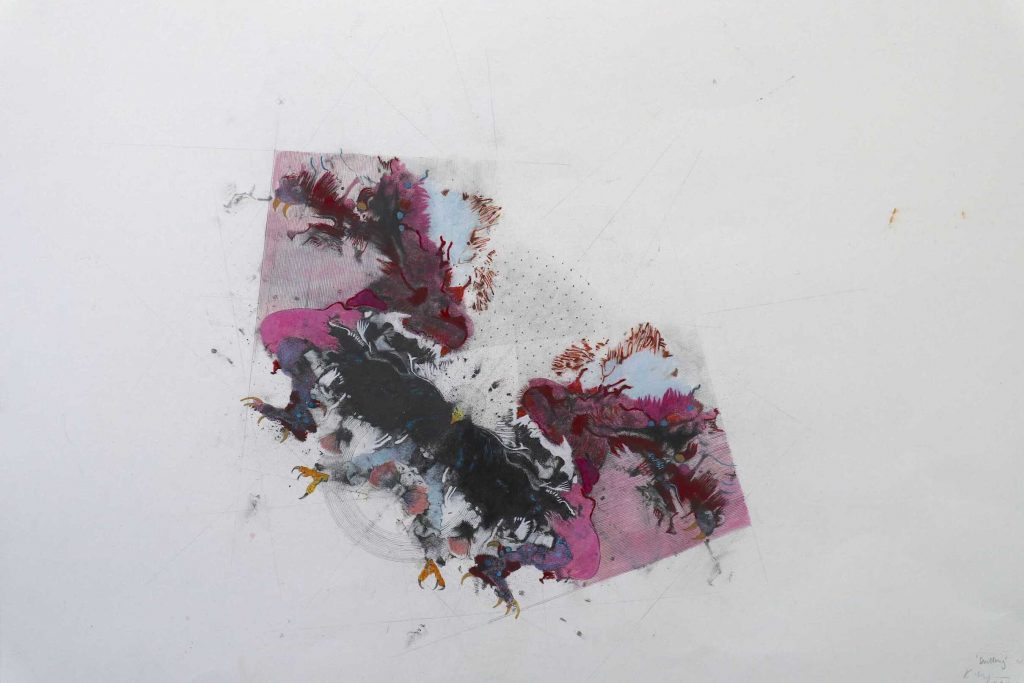
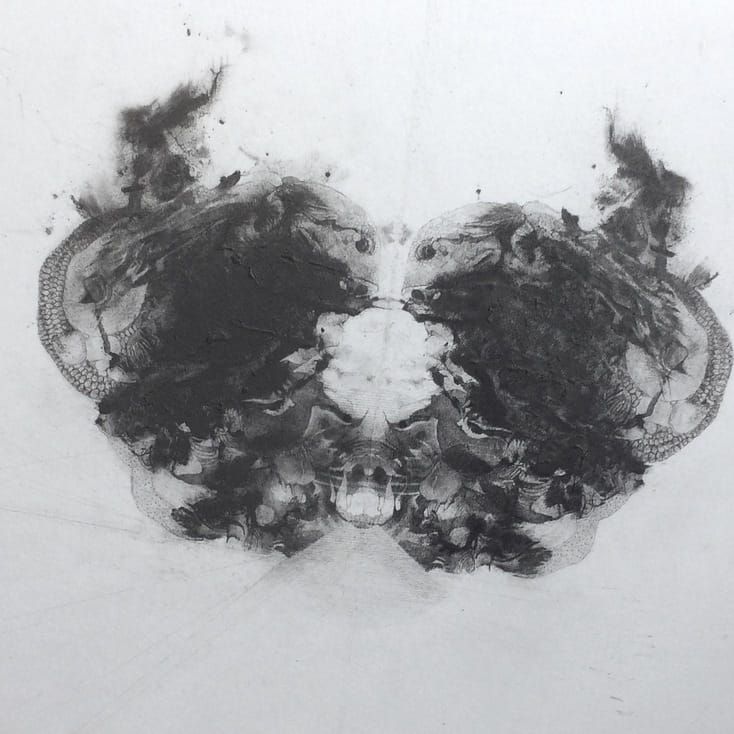
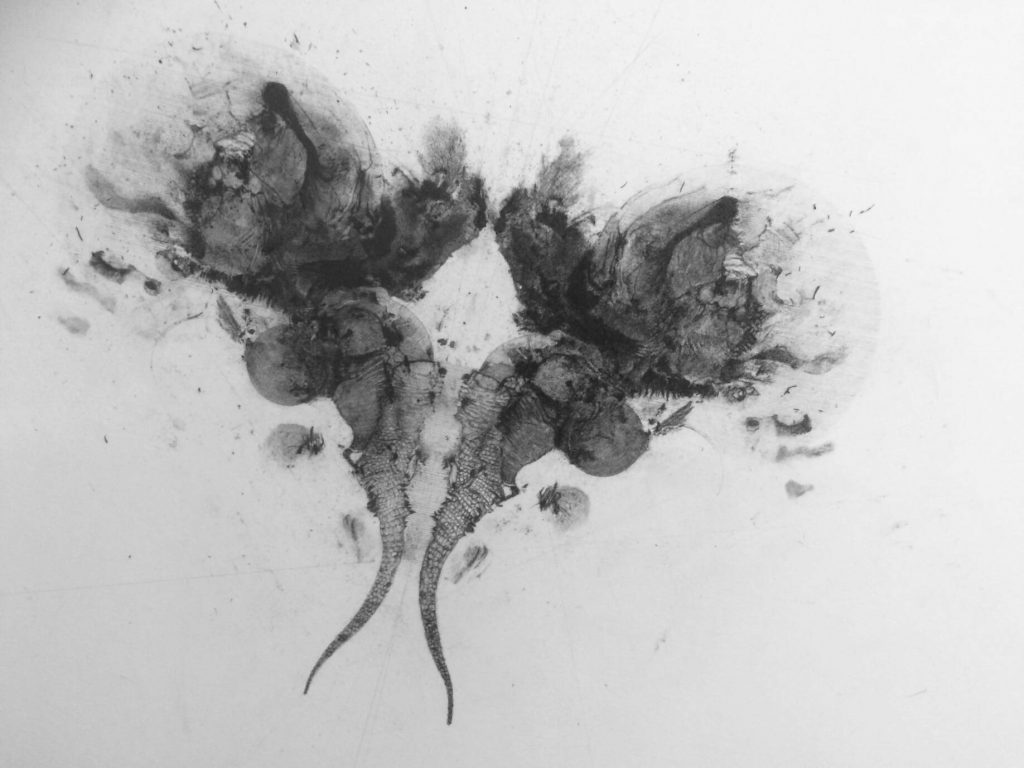
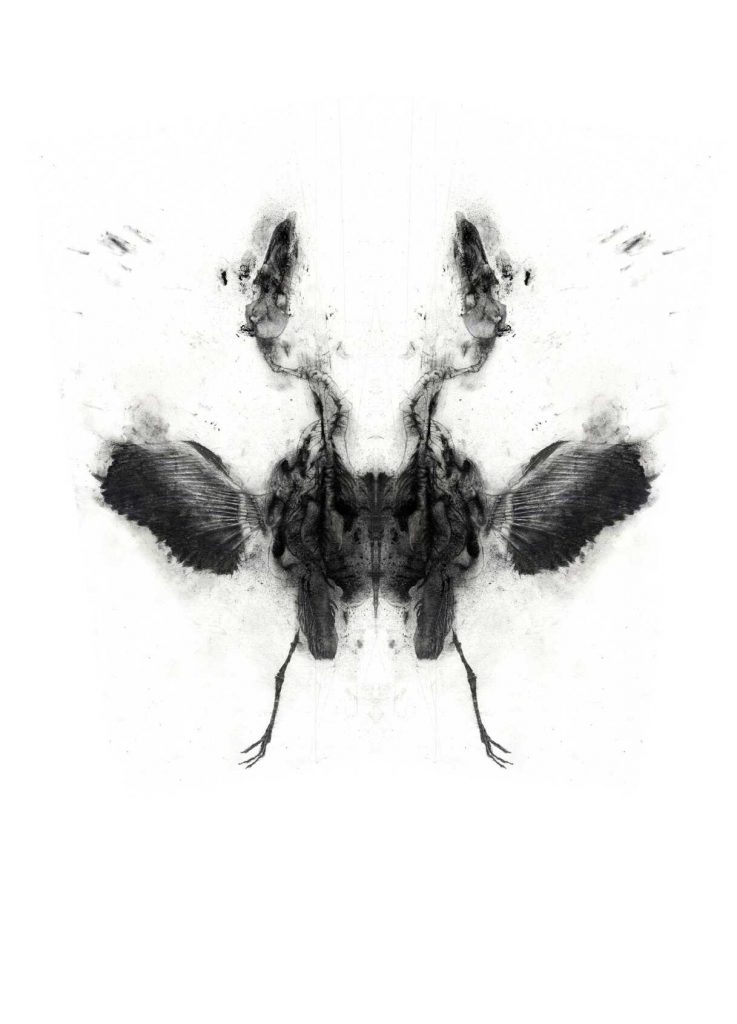
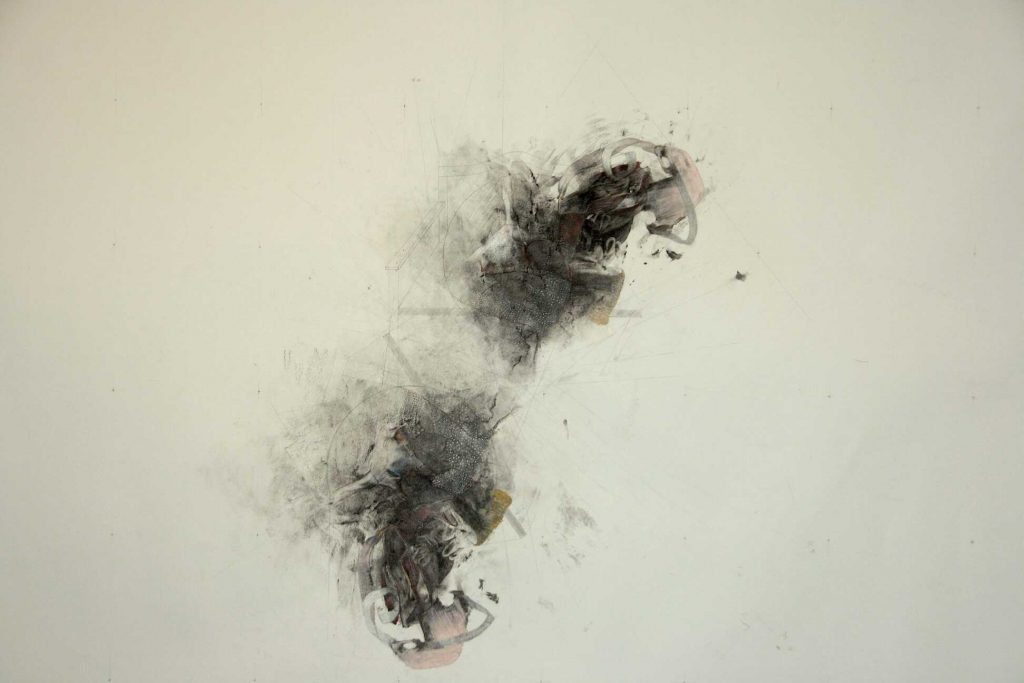
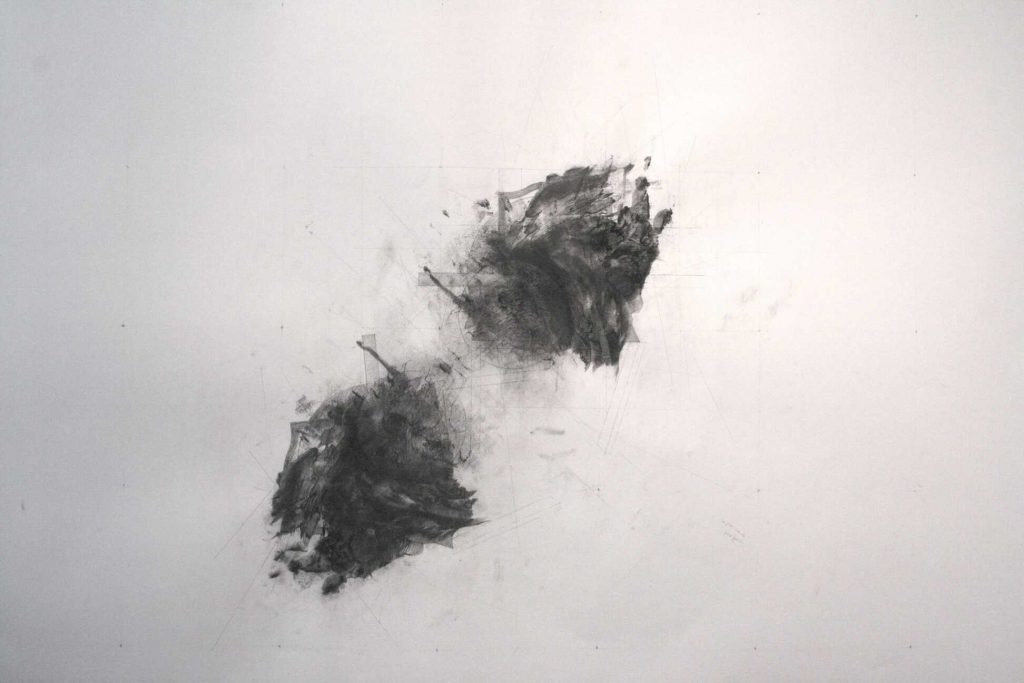
Kurma is another example of the way in which hybrid images have been produced intuitively from randomised mark making. The Kurma is Sanskrit for turtle who was consigned to calm the churning ocean of cosmic milk in Hindu mythology. You can see the swirling vortex in the centre of this image.